

How to Install Outdoor Slat Wall Panels
Please read through these instructions fully before you begin. Outdoor slat installation video coming soon 👀
⚠️ Before you start: Check with your local council about any permits or building codes that may apply to exterior wall cladding in your area. If you're in a strata, body corporate, or rental property, get approval before proceeding.
Recommended Tools
- Circular saw (carbide-tipped blade recommended)
- Drill and drill bits
- Spirit level
- Measuring tape and pencil
- Safety glasses, gloves and a dust mask
What You'll Need
- Joists — aluminium or pressure-treated timber (cut to suit your wall)
- Wall plugs and screws to fix joists to the wall
- Colour-matched screws to attach the panels (12 are included per box)
- Trims as needed — see the Finishing Trims section below
Step #1: Plan Your Layout
Before you touch a single panel, take the time to plan out your wall. Measure the area carefully and sketch out where each panel will go. This helps you work out how many panels you need, where your joins will fall, and how to handle corners and edges cleanly. A bit of planning upfront saves a lot of headaches later.
Pick a dry, mild day to do your install. Avoid working in direct rain or harsh sun, and if it's a hot day, keep your panels shaded until you're ready to put them up.
Step #2: Prepare the Wall
The surface you're installing onto needs to be solid, smooth and structurally sound. Check for any loose render, damaged sections or moisture issues and fix these before starting.
The panels must be installed onto a substructure — they cannot be fixed directly to a flat wall. This allows airflow behind the cladding, which is essential for preventing moisture build-up.
Step #3: Install the Joists
Fix your joists to the wall using appropriate wall plugs and screws. Space joists no more than 400mm apart (centre to centre), and space your wall anchors no more than 500mm apart along each joist.
Make sure the joists are level and sitting flush — this sets the foundation for the whole installation and will directly affect how your finished wall looks.
Step #4: Cut Your Panels to Size
Measure twice, then mark your cut lines with a pencil. Use a circular saw with a carbide-tipped blade for clean, accurate cuts. Take extra care around corners, edges and any obstacles like pipes or lights — a tidy cut here makes a big difference to the finished result.
If you're using any of the trims, factor their dimensions into your measurements before cutting. See the Finishing Trims section below for guidance.
Step #5: Dry Fit First
Before fixing anything permanently, hold your panels up against the joists to check everything aligns and sits level. This is the easiest time to spot any issues and make adjustments. If you're using the Fitted Corner Trim, do a dry fit with the trim in place too so you can check the fit before committing.
Step #6: Fix the First Panel
Place the first panel onto the joists and screw it into place using your colour-matched screws. Fix the screws into the groove of the panel — not through the face. Always pre-drill a pilot hole first to avoid splitting or cracking the panel.
Leave a gap of at least 10mm between the bottom of the panels and a hardened surface (like concrete), or at least 50mm above a non-hardened surface like grass or gravel. This allows for drainage and ventilation.
Step #7: Continue Installing Panels
Connect each subsequent panel to the previous one and fix it to the joists the same way — screws into the groove, pilot holes first. As you go, make sure each panel is sitting level before screwing it off.
Leave at least an 8mm gap between the ends of adjacent panels where they meet at a butt joint. This allows for natural expansion and contraction with temperature changes, and keeps airflow moving through the wall.
Step #8: Add Finishing Trims
Once your panels are up, fit your chosen trims to finish the installation cleanly. See the Finishing Trims section below for which trim to use where. Trims can be cut to length with a circular saw or fine-toothed handsaw. Fix in place with colour-matched screws or a suitable exterior-grade adhesive.
Step #9: Final Check
Step back and look over the whole wall. Check that all panels are sitting flat and level, that the gaps are consistent, and that all screws are properly driven in. Give it a once-over for any loose edges or sections that need a touch-up.
Step #10: Done!
Your Outdoor Slat Wall Panels are installed and ready to enjoy. These panels are built to handle Australian conditions — resistant to moisture, UV, and the temperature swings that come with outdoor use — so you can expect a great-looking result for years to come.
Finishing Trims
We offer three trims designed to give your outdoor slat installation a clean, professional finish. All trims are available in Teak, Walnut and Black to match your panels, and each piece is 2900mm long.
Cover Panel Trim (WPC)
Used to finish the top and bottom edges of your installation — anywhere the panel ends are exposed horizontally. Made from WPC (wood plastic composite) to match the look and durability of the panels themselves.
Edge Banding — Aluminium
Used to finish exposed vertical side edges, such as where your installation ends against a wall, fence post, or open edge. The aluminium construction gives it extra rigidity and a sleek finish.
Fitted Corner Trim (WPC)
Used wherever two panel runs meet at a corner join. The fitted design clips neatly over the corner so you don't need to mitre cut your panels — just run each panel up to the corner and let the trim do the work. Made from WPC to match the panels.
Got a question or need a hand? Get in touch with our team and we'll be happy to help.
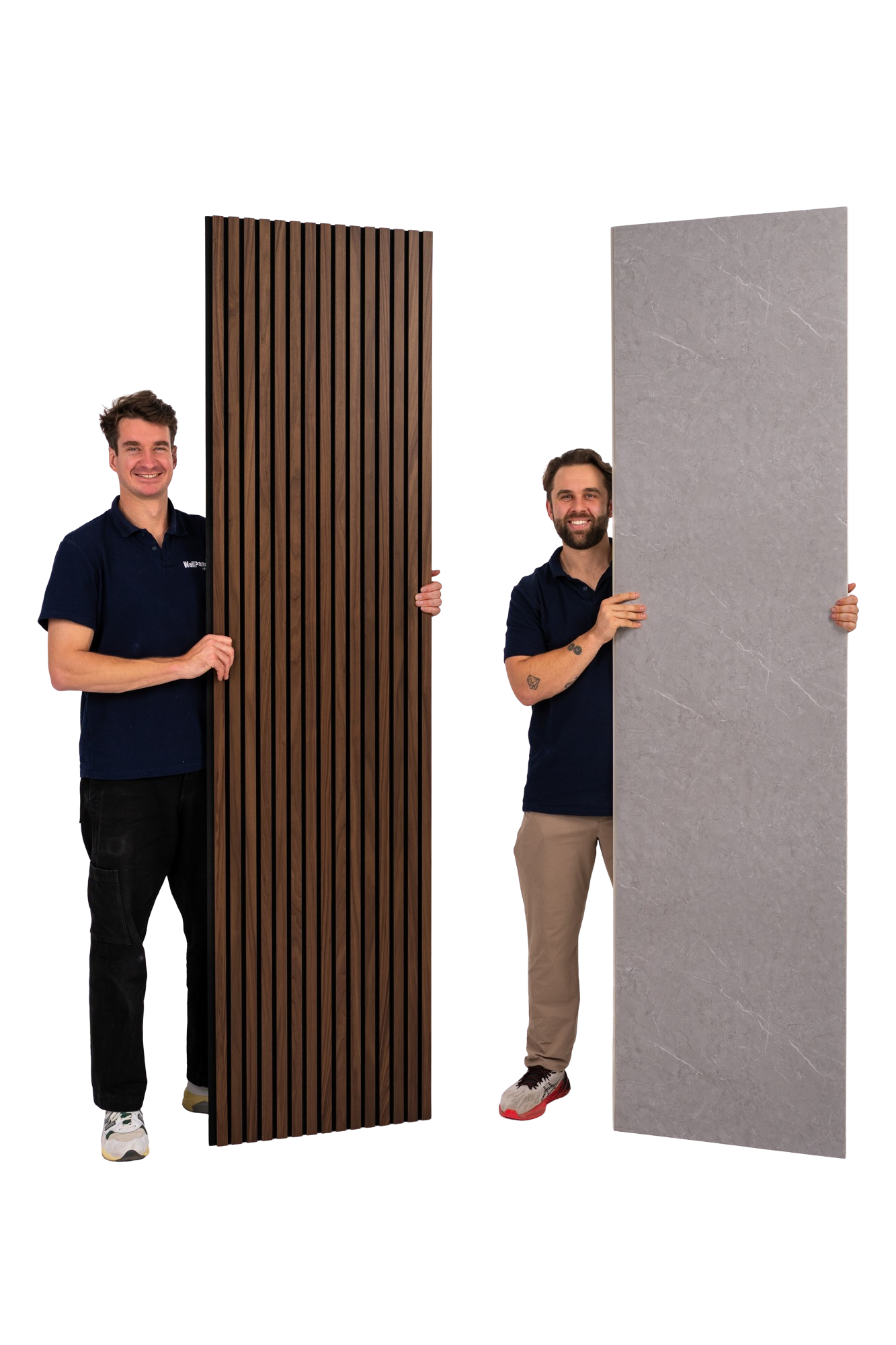
Have a question or need help choosing the right panels? Our expert team is here to guide you through every step, from picking samples to placing your order and tracking delivery. Whether you're planning a big renovation or a quick weekend update, we’re ready to assist with honest advice and responsive support.
Give us a call at 1800 841 108 or reach out online — we want to make your wall panel renovation dreams a reality!