

How to Install Flexible Stone Wall Panels
Please watch the video above to get the gist of what it takes to install your flexible stone wall panels. We've included some extra information below too, so please read this page thoroughly as well.
Recommended Tools
- Circular saw or track saw (diamond tile blade — thin kerf, continuous rim recommended)
- Measuring tape and pencil
- Pressure roller
- Masking tape
- Adhesive gun
- Heat gun (recommended in cooler weather)
- Safety glasses and gloves
Step #1: Unbox and Flatten Panels
Remove the flexible stone wall panels from the box. If they've been stored in a rolled position, lay them flat on a clean, level surface and allow them to fully flatten before you start cutting or installing anything.
This process can take up to 48 hours depending on how long they've been rolled and the temperature of the room — it'll take longer in cooler conditions. Using a heat gun over the surface can significantly speed this up. Some minor surface flaking during unboxing is completely normal and is not a defect.
Step #2: Prepare the Surface
Clean the installation area thoroughly to remove any dust, grease, loose paint or debris. The surface also needs to be flat — run your hand or a straight edge across it and check for any significant bumps or ridges. If there are any, fill or sand them down before proceeding.
This step matters more than people realise. If the surface isn't clean and flat, the adhesive won't bond evenly and you can end up with panels lifting or looking uneven over time.
Step #3: Measure and Mark
Measure the area you're covering carefully and mark your cut lines directly on the panel using a pencil. Always double-check your measurements before cutting — measure twice, cut once.
Step #4: Cut Panels to Size
Use a circular saw or track saw fitted with a diamond tile blade to cut your panels to size. Wet cutting is recommended as it gives a cleaner edge and keeps dust to a minimum, but dry cutting works fine too if that's what you have available.
Take your time with cuts around edges, power points or any obstacles — a clean cut here makes the finished result look much more professional.
Step #5: Dry Fit First
Before applying any adhesive, hold each panel up against the wall to check your cuts are correct and everything lines up as expected. It's much easier to make adjustments now than after the adhesive is on. Check that the panels are level while you're at it.
Step #6: Mask the Edges
Apply masking tape along all edges of each panel before applying adhesive. This is an easy step to skip but worth doing — it prevents adhesive from squeezing out and staining the stone surface during installation.
Step #7: Apply Adhesive and Press Into Place
Apply your chosen adhesive (we can recommend this one!) evenly across the full back surface of the panel. Once the adhesive is on, position the panel on the wall and press it firmly into place. Then use a pressure roller across the entire panel surface to push out any air pockets and ensure consistent contact with the wall.
For wet area or exterior installations, make sure you're using a waterproof-rated adhesive appropriate for those conditions. If you're unsure which adhesive to use, check our adhesive guide or get in touch and we can point you in the right direction.
Step #8: Grout Between Panels (Optional)
Grouting between panels is optional but can give a great finished look. If you'd like to do this, apply masking tape along the edges of adjacent panels and leave a gap of around 2–3mm between them. Use a grout gun to apply your preferred grout colour into the gap. A flexible, silicone-based grout is recommended as it has some give and handles minor movement better than rigid grout over time.
Remove the masking tape before the grout fully sets for a clean edge.
Step #9: Allow to Cure
Leave the installation completely undisturbed and allow the adhesive to cure fully before applying any pressure, adding fixtures or using the area. This typically takes 24–48 hours, though it may take longer in cooler temperatures or with certain adhesives. Check the adhesive manufacturer's instructions if you're unsure.
Step #10: Done!
Once fully cured, peel off any remaining masking tape and give the installation a final once-over. Check all edges and joins look clean and consistent, and that everything is sitting flat against the wall.
Your flexible stone panels are ready to enjoy!
Got a question or need a hand? Get in touch with our team and we'll be happy to help.
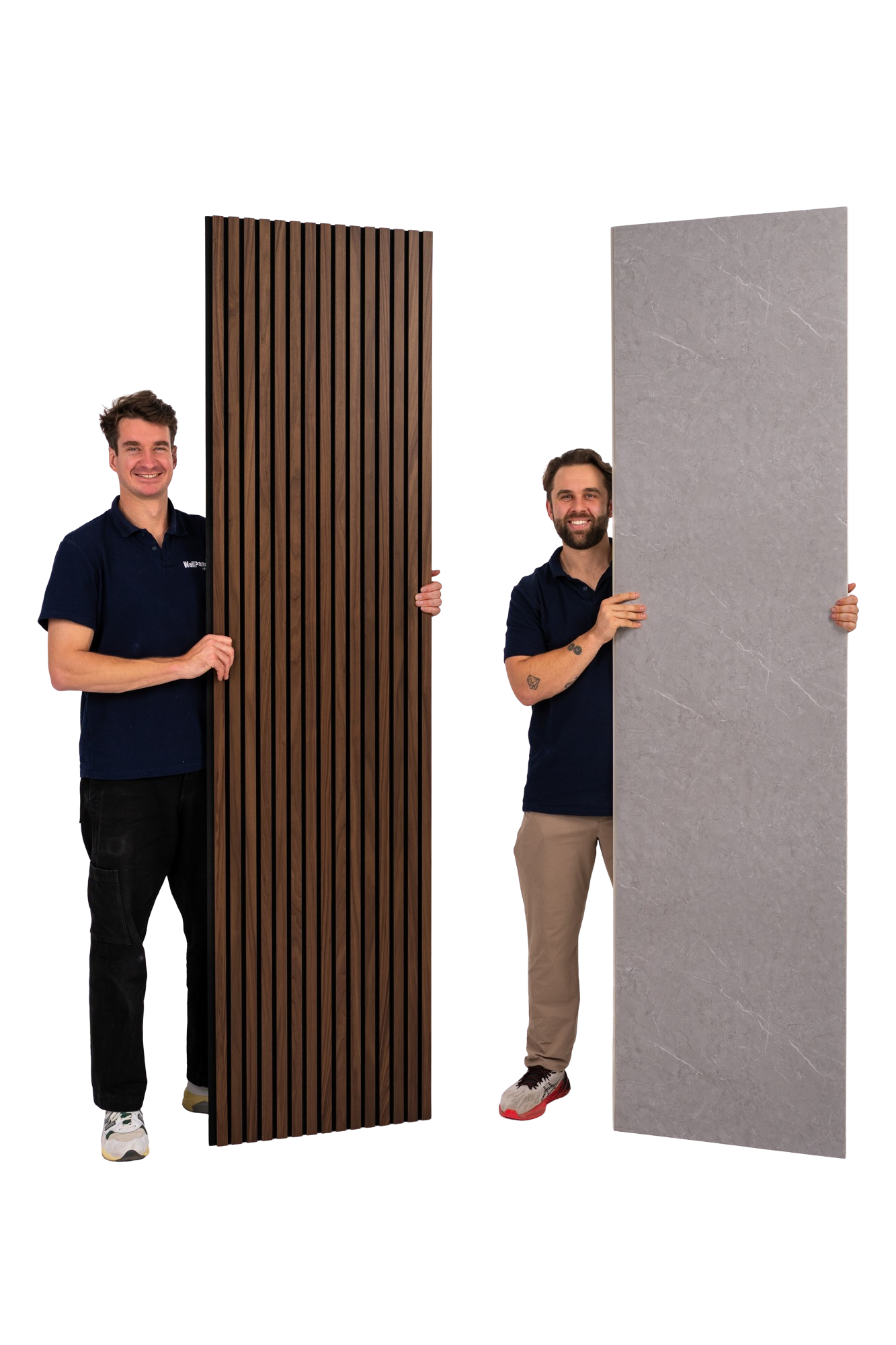
Have a question or need help choosing the right panels? Our expert team is here to guide you through every step, from picking samples to placing your order and tracking delivery. Whether you're planning a big renovation or a quick weekend update, we’re ready to assist with honest advice and responsive support.
Give us a call at 1800 841 108 or reach out online — we want to make your wall panel renovation dreams a reality!